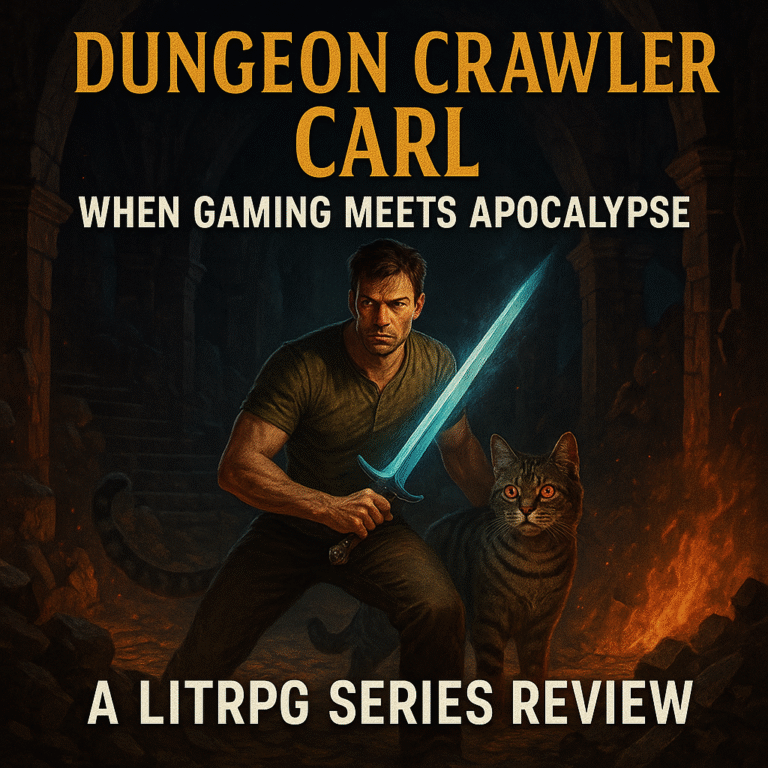
Progression Fantasy vs. LitRPG: Breaking Down the Genres
For fantasy readers who love character growth, power progression, and gaming elements in their fiction, two genres stand out: Progression Fantasy and LitRPG. While they share common elements, they represent distinct reading experiences that appeal to overlapping but different audiences.
In this breakdown, we’ll explore what makes each genre unique, how they overlap, and which titles might appeal to fans of tabletop RPGs, computer games, and fantasy literature. Whether you’re new to these genres or looking to expand your reading list, this guide will help you navigate these increasingly popular fiction categories.
What is Progression Fantasy?
Progression Fantasy focuses on characters who grow steadily in power and capability throughout the narrative. The primary appeal is watching protagonists overcome challenges, gain new abilities, and rise to meet increasingly difficult obstacles.
Key Elements of Progression Fantasy:
- Clear power progression systems
- Training and skill development sequences
- Measurable character growth
- Escalating challenges that match character development
- Focus on the journey of becoming stronger
Progression Fantasy doesn’t require explicit game mechanics or RPG elements. Instead, it emphasizes the satisfaction of watching characters improve through effort, training, and overcoming obstacles.
Notable Progression Fantasy Series:
- Cradle by Will Wight
- Arcane Ascension by Andrew Rowe
- Mage Errant by John Bierce
- A Thousand Li by Tao Wong
- The Weirkey Chronicles by Sarah Lin
What is LitRPG?
LitRPG (Literary Role-Playing Game) blends storytelling with explicit game mechanics. Characters navigate worlds with RPG-like systems complete with stats, levels, skills, and experience points that are clearly visible to both characters and readers.
If you enjoy tabletop RPGs like D&D or computer RPGs, LitRPG offers a familiar framework within narrative fiction.
Key Elements of LitRPG:
- Explicit game mechanics (stats, levels, skills, etc.)
- Character sheets or status screens
- Numerical progression (XP, skill levels)
- Game-like interfaces and systems
- Often includes actual tables, stat blocks, and system messages
LitRPG stories frequently take place within virtual reality games, game-like alternate worlds, or settings where game mechanics are an inherent part of reality.
For recommendations in this genre, check out our guide to LitRPG Essentials: 12 Must-Read Books for Fans of Gaming and Fantasy.
The Spectrum Between Genres
These genres exist on a spectrum rather than in completely separate categories:
Pure Progression Fantasy → Soft Progression Systems → GameLit → Soft LitRPG → Hard LitRPG
GameLit: The Middle Ground
GameLit (Gaming Literature) often serves as a middle ground between Progression Fantasy and LitRPG. These stories incorporate game-inspired elements without necessarily including explicit stats, levels, or character sheets.
GameLit borrows gaming concepts and structures but integrates them more subtly into the narrative, often without breaking immersion for status updates or skill descriptions.
Key Differences Between the Genres
| Feature | Progression Fantasy | LitRPG |
|---|---|---|
| Game Mechanics | Implicit or absent | Explicit and central |
| Stats/Numbers | Rarely shown | Frequently displayed |
| Setting | Usually secondary worlds | Often virtual or game worlds |
| Focus | Character development | System mastery and progression |
| Reader Appeal | Growth narrative | Game mechanics exploration |
| RPG Connection | Thematic similarities | Direct implementation |
Why These Genres Appeal to RPG Fans
Both genres offer experiences that resonate with fans of tabletop RPGs and computer RPGs:
- Character Building: Similar to creating and developing characters in RPGs
- Skill Progression: Mirrors the advancement systems in games
- Power Fantasy: Offers the satisfaction of character improvement
- Rule Systems: Provides structured worlds with clear mechanisms for advancement
- Problem Solving: Characters must optimize their growth and approach challenges strategically
GM Toolkit: Borrowing from These Genres
Tabletop game masters can adapt ideas from these genres to enhance their campaigns:
- Training Montages: Create structured advancement opportunities beyond just combat
- Visible Progress: Develop custom advancement tracks for non-combat skills
- Power Plateaus: Design scenarios where characters must find creative solutions when direct power increases aren’t available
- Cultivation Systems: Borrow structured power development systems from cultivation novels
- Challenge Escalation: Design adventures that specifically test newly acquired abilities
For more on structuring your RPG campaigns, see our guides on Session Zero Strategies and Campaign Setup.
Which Genre Is Right For You?
Consider Progression Fantasy if you:
- Prefer narrative flow without game system interruptions
- Enjoy training and development sequences
- Like magic systems and worldbuilding
- Appreciate character growth without number-crunching
- Enjoy traditional fantasy with systematic power growth
Consider LitRPG if you:
- Love RPG mechanics and systems
- Enjoy analyzing stats and optimizing character builds
- Like seeing clear numerical progression
- Appreciate game-like problem solving
- Enjoy stories that directly incorporate gaming elements
Many readers enjoy both genres for different reasons, and many authors blend elements from each to create unique reading experiences.
Crossover with Board Games
The systematic nature of both genres shares similarities with RPG Board Games, where character progression and strategic decision-making are central to gameplay. Games like Gloomhaven, Descent, and Tainted Grail capture the progression elements that make these literary genres so appealing.
Our guide to the Best RPG Board Games of 2024 highlights several titles that capture the progression and character development elements prominent in these literary genres.
Conclusion
Whether you prefer the explicit game systems of LitRPG or the more narrative-focused character development of Progression Fantasy, both genres offer satisfying reading experiences for fans of RPGs and fantasy fiction. The boundaries between these genres continue to blur as authors experiment with different approaches to character advancement and story structure.
Next time you’re looking for a new book that captures the feeling of leveling up characters in your favorite RPG, consider exploring these genres for fresh takes on power development and character growth.
What to Read Next
What are your favorite Progression Fantasy or LitRPG series? Have you found these books inspiring for your tabletop gaming? Share your thoughts in the comments below!
If you’re interested in exploring how RPG elements work in different formats, check out our other articles on tabletop RPG basics, computer RPGs, and board games with RPG elements.
RPG news, GM tips, and system deep dives — straight to your inbox, no filler.