How the Bounty System Works in Crimson Desert: A Complete Hunter’s Guide
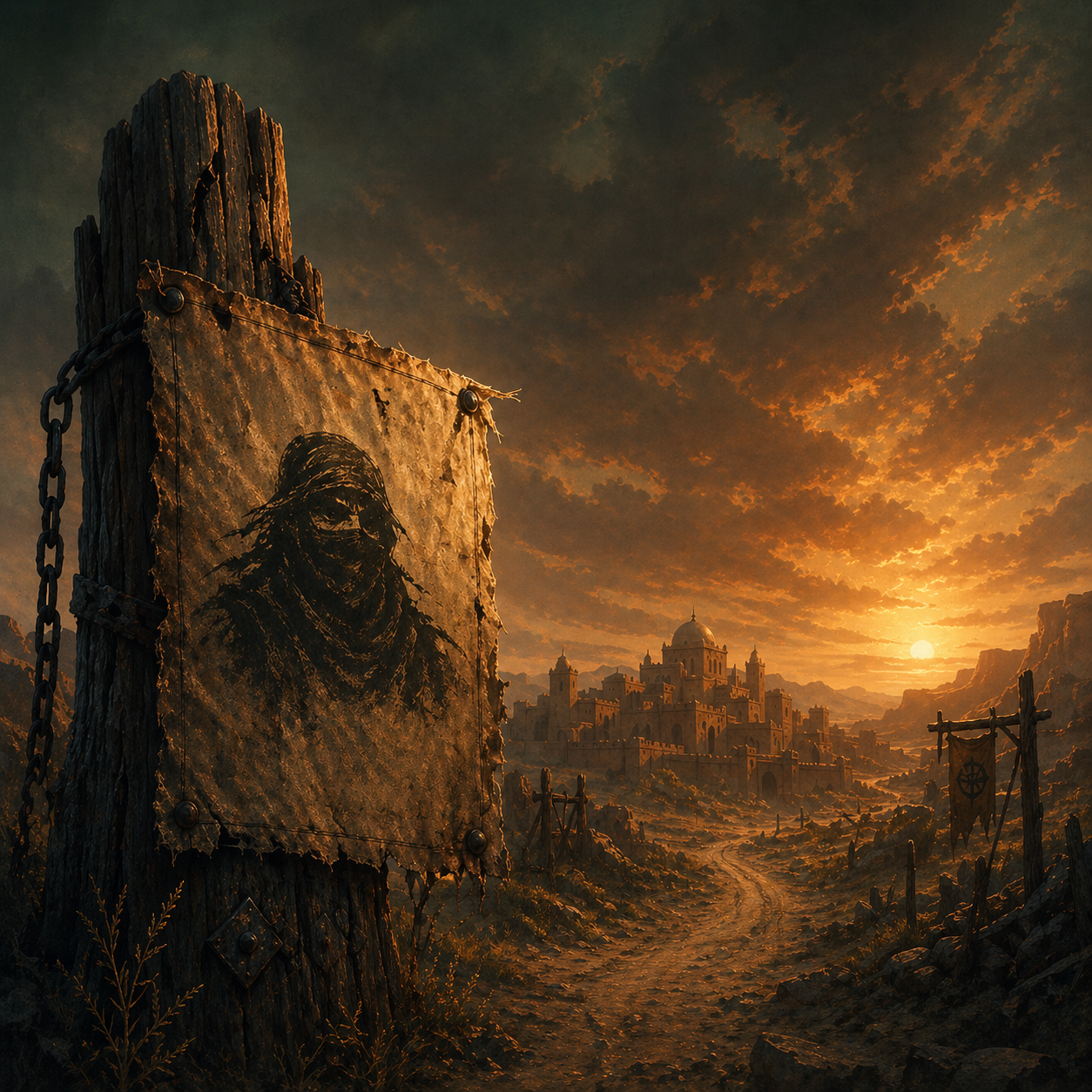
There’s a moment in Crimson Desert that catches almost every new player off guard. You’re riding through Pywel, you spot a wooden post nailed with weathered paper, and a prompt appears: pick up the notice. You do, and suddenly your journal has a name, a region, and a problem — there’s an outlaw out there, and somebody wants them brought in.
The bounty system is one of the most rewarding loops in the game, but it’s also one of the easiest to misread. Players regularly conflate “bounty hunting” with the wanted system, get stuck trying to kill targets the game wants them to capture alive, and wonder why their reward looks smaller than expected. None of this is your fault — the game explains very little of it directly.
This guide walks through the entire poster-to-prisoner loop, from the moment you spot a notice on a roadside post to the moment you collect your silver at a constabulary desk. Along the way I’ll use Bianca — currently the most-searched bounty in the game — as a worked example, because her hunt happens to demonstrate every quirk of the system in one neat package.
| Where to find bounties | Wooden notice posts in towns and along main roads across Pywel |
| How to activate | Walk up to a poster and select it — the hunt is added to your quest log automatically |
| What you get | A search zone marker, a name, and sometimes a time-of-day hint |
| Best capture method | Tackle and tie up — alive pays roughly double versus killed |
| Where to turn in | The constabulary named on the original poster — not necessarily the closest one |
What Bounty Notices Actually Are
A bounty notice in Crimson Desert is a piece of physical paper pinned to a post in the world. You don’t get them from a quest-giver, a dialogue tree, or a menu — you have to physically encounter them. They sit on wooden boards outside taverns, near city gates, at major crossroads, and occasionally tacked to fences along trade routes. Once you start looking, you’ll see them everywhere.
The notices are written from the perspective of whichever local authority issued them, which is the first thing the game does cleverly. A bounty posted by Pywel City Watch reads differently from one posted by a small village constabulary, and the language gives you a strong clue about how serious the target is. A village notice for a chicken thief is not a Pywel notice for a bandit captain.
Every bounty in Crimson Desert follows the same six-stage loop. Tap any step for the key tip.
Spot the Notice
Bounty notices appear on wooden posts in towns and along main roads across Pywel. Look near taverns, city gates, and major crossroads.
When you interact with a poster, the bounty enters your quest journal and the relevant region is marked on your map. You can have multiple active bounties at once, which is actually the most efficient way to play — picking up three or four notices from one town and hunting them in a sweep is far quicker than processing them one by one.
Activating the Hunt
There’s no formal acceptance step. The act of reading a poster activates the bounty automatically and the hunt becomes a tracked entry in your journal. You can ignore it forever if you want, and there’s no penalty for picking up a bounty and never completing it. This is worth knowing because it removes the pressure to commit — if you pull a notice and decide you don’t fancy the trip, just leave it.
What you can’t do is duplicate a bounty by picking up the same poster from a different location, and you can’t hand a target in without having read the original notice first. The poster is the receipt; without it, the constabulary won’t pay out.
Bounty Targets Versus Wanted Criminals
This is the single biggest source of confusion among new players, and it’s worth taking a moment to separate the two systems entirely. They share vocabulary but they do not share mechanics.
| Question | You’re the hunter Bounty Target | You’re the prey Wanted Status |
|---|---|---|
| Who’s the criminal? | A named outlaw whose face appears on a poster, somewhere in the world, waiting to be found. | You. Specifically, your character — accumulated through crimes committed in front of witnesses. |
| How does it start? | You read a bounty notice on a wooden post in town or on a road. The hunt activates automatically. | You commit a crime — theft, assault, looting in a restricted area — and a witness reports it. |
| What does the marker mean? | A search zone on the map showing roughly where the target was last seen. | A wanted indicator next to your character. Guards in the region will pursue you actively. |
| How does it end? | You capture the target — alive ideally — and deliver them to the constabulary on the poster. | You either pay off the bounty, get arrested and serve time, or get killed. The meter resets. |
| Reward or consequence? | Silver, sometimes reputation, occasionally unique drops on higher-tier targets. | Lost coin, lost time in prison, lost gear if confiscated, and worse rates with regional NPCs. |
| Mental shortcut | Noun A thing you collect from posters and hand in for silver. |
Adjective A state you can fall into and need to climb out of. |
A bounty target is somebody else — a named outlaw whose face appears on a poster, who exists somewhere in the world for you to find, and whose capture pays you silver. You’re the hunter.
A wanted status is something you accumulate when you commit crimes in front of witnesses or get caught looting in restricted areas. Guards will pursue you, your wanted level can climb if you keep offending, and getting arrested or killed will send you to prison and reset the meter. You’re the prey.
The two systems use overlapping language in the UI, which is why so many players get tangled up. If your screen shows a “wanted” indicator next to your own character, that’s the criminal-status meter — not a bounty you can claim. If a NPC has a wanted poster floating above their head or a marker tied to a journal entry you started by reading a notice, that’s a bounty target you can capture.
A useful mental shortcut: bounties are nouns (a thing you collect from posters), wanted is an adjective (a state you can fall into). They almost never interact with each other directly.
Tracking Your Target
Once a bounty is active, the map shows you a search zone — usually a fairly broad area rather than a precise pin. This is intentional. The system wants you to do some of the legwork, asking villagers, listening at taverns, and reading the journal entry for clues the poster mentioned about the target’s habits.
Some bounties also include a time-of-day hint. A target described as “rarely seen except after sunset” really does mean what it says — turn up at noon and the camp will be empty or staffed by minor goons. Targets that run with companions tend to operate during the day; targets who hide alone often appear only at night. This single detail catches more players than any other part of the loop.
A handful of bounties involve targets in disguise. Bianca is the most famous example — she’s been spotted as a nun travelling with two children, which is exactly the kind of thing players don’t expect to investigate. If your search zone doesn’t contain anyone obviously criminal-looking, look at who is there. The game frequently hides targets in plain sight.
Working an Example: Bianca
Bianca’s bounty is a perfect first case study because she demonstrates every quirk of the system in one hunt. Her notice gives you a search zone but no precise location. Her journal hint mentions unusual companions. She’s not where you think she’ll be, and she’ll attempt to escape rather than fight if you blunder in.
The intended flow is: read the notice, study the search zone on your map, travel to the area, observe NPCs in the zone before engaging anyone, identify the disguised target, and approach with a tackle ready. If you charge in with a sword drawn, she runs and the encounter resets in a less convenient location. Patience pays — both literally and in silver.
This kind of layered hunt is why the system feels meaningful in a way that fetch-style bounties in other open-world games don’t. You’re not following a marker; you’re reading a brief.
Capturing Targets Alive
Almost every bounty in Crimson Desert pays substantially more for a live capture than for a corpse. The exact ratios vary, but the general rule is roughly two-to-one — Blix, an early-game bandit, pays 15 silver alive against 7 silver dead, and most other bounties follow a similar curve. Killing a target completes the bounty, but you’re leaving money on the table every time.
The live-capture loop is straightforward once you understand it, but it isn’t the same as combat. You need to close distance, trigger a tackle prompt at short range, and then bind the target before they recover. Hitting them with a sword does damage but doesn’t progress the capture state — you have to physically grapple them.
This means the order of operations on a multi-NPC encounter matters. Clear out any companions or guards first, ideally with non-lethal takedowns where possible, then approach the named target separately for the tackle. Trying to tackle the bounty while three of their goons are still swinging at you is how most failed captures happen.
The Tackle and Tie-Up Loop
The tackle prompt appears when you’re close enough and the target is either fleeing or staggered. Time it right and your character launches into a takedown animation that knocks the target prone. Once they’re down, a second prompt appears for restraints — this is the part that actually completes the capture.
If you skip the restraint step, the target will get back up, and they will run. Targets who escape once become significantly harder to catch the second time, sometimes relocating to new zones entirely. The game gives you a generous window for the tie-up, but it’s not infinite.
A note on companions and crowd control: some bounties run with two or three guards who’ll respawn or call reinforcements if a fight drags on. If you can’t isolate the target cleanly, lure them to the edge of their zone first and engage there. Bandit camps are designed to favour the defenders; open ground favours the hunter.
Where to Turn In Your Catch
This is the question that confuses players who’ve made it through the capture successfully: where do I take this person? The answer is on the original poster — the one you picked up to start the hunt — and it’s specifically the constabulary that issued the notice. Your quest log will repeat this information, but the poster is the source of truth.
The capture location and the turn-in location are almost never the same place. You might be hunting in the foothills outside a city and need to bring the target all the way back to the city’s central constabulary to get paid. This is one of the most-asked questions about the system, and the answer is unambiguously yes — you do need to make the return trip. The game treats prisoner transport as part of the bounty, not an afterthought.
A bound target can be carried, dragged, or loaded onto your horse. Riding is by far the fastest method, and a target on horseback is much harder to lose than one slung over your shoulder. If you’ve got several bounties active in the same region, consolidate the trips back so you’re not making the same ride three times in a row.
When the Wrong Constabulary Is Closer
You might pass a closer constabulary on the way back and wonder why the game won’t let you turn in there. The bounty system is regional — a notice issued by Constabulary A pays out only at Constabulary A. Walking your prisoner into Constabulary B’s lobby will get you nothing but odd looks. This is intentional; it stops players from clearing one region and dumping all the targets at whichever desk happens to be most convenient.
The upshot is that planning your route matters. If you know you’ll be hunting in a particular area, pick up notices from the nearest constabulary first, even if it means a small detour. The travel time you save by avoiding a long return ride is significant.
Reward Structure and Worth-It Maths
The base bounty payout scales roughly with the danger of the target, but the alive-versus-dead multiplier is consistent enough that you can rule of thumb it. A bounty advertising 20 silver on the poster is realistically a 20-silver job if you bring the target in alive and a 10-silver job if you kill them.
Capture difficulty also scales upward, so the highest-value bounties tend to be the hardest to take alive. Whether it’s worth the effort depends on what you’re saving for. Early-game bounties are excellent for gear upgrades; mid-game bounties tend to fund horse equipment and combat consumables; late-game bounties enter the territory where you’re chasing reputation and unique drops more than the silver itself.
Alive captures pay roughly twice as much as dead ones across every tier. Blix is the confirmed example — 15 silver alive against 7 dead — and most other bounties follow the same curve. Killing a target completes the bounty, but you’re leaving money on the table every time.
If you’re using bounties as your primary income source — which is a viable build — the efficient approach is to clear three or four notices in a single sweep through one region, prioritising live captures, and timing your return trip to coincide with merchant restock cycles in the destination city. This compresses travel time across multiple revenue streams. For more on getting your bearings before diving in, the Crimson Desert beginner’s guide covers the core systems you’ll lean on across every bounty hunt — combat, traversal, and economy.
Common Mistakes and How to Avoid Them
A handful of errors crop up repeatedly enough that they’re worth flagging directly. Most aren’t intuitive and the game doesn’t explain any of them clearly.
Charging in with a weapon drawn. Targets with disguises or escape routines react to weapon-draw, not to your presence. Approach unarmed if the bounty notes evasive behaviour.
Skipping the restraint prompt. A tackled target who isn’t tied is a target who’s about to run. The animation makes it look like the capture is complete; it isn’t.
Engaging at the wrong time of day. If the journal mentions a time hint, it’s not flavour text. Showing up off-schedule means the target either isn’t there or is surrounded by extra company.
Returning to the wrong constabulary. Always check the poster before you start the trip back. The closest constabulary on your map is not necessarily the right one, and the game won’t redirect you politely.
Killing when you meant to capture. Standard combat damage stacks even during a tackle attempt, and overkill on a near-defeated target turns a 20-silver job into a 10-silver one. If you’re aiming for live capture, switch to fists or a non-lethal weapon before the final blow.
The good news is that most of these are one-time mistakes. Once you’ve lost half a payout to a bad return trip, you remember to check the poster forever after.
Putting It Together
The bounty system rewards a particular kind of attention. You read a piece of paper, you look at a map, you pay attention to who’s in the zone, and you make decisions about how to approach. Compared to mission-marker hunts in most open-world games, it feels considerably more like real detective work, even when the underlying systems are still fairly mechanical.
Once you’ve completed three or four bounties, the loop becomes second nature, and the system stops being something you reference and starts being something you do reflexively. That’s the moment Crimson Desert opens up — when the world stops feeling like a list of quests and starts feeling like a place where things are happening that you can choose to involve yourself in. There’s a fuller picture of how this plays out in 10 things to know about Crimson Desert before you buy, which gets into the broader rhythm of the game beyond any single system.
If Bianca is the bounty you came here for, the short version is this: don’t trust your eyes, do trust your map, approach without weapons drawn, tackle before she runs, and bring her back to the constabulary that issued the notice. Everything else is variations on that pattern.
The bounty board in the next town is waiting. Go pick a poster.
Continue Your Journey
- Crimson Desert Beginner’s Guide: What to Do First and How Everything Works — the foundational systems you’ll use across every bounty hunt
- 10 Things to Know About Crimson Desert Before You Buy — the broader picture before you commit to your first hunt
Discussion: What’s the strangest place you’ve found a bounty target hiding? Drop your story in the comments — particularly if it involved a disguise nobody saw coming.
If you found this useful, consider joining the Forst Stories newsletter for weekly RPG breakdowns, video game guides, and the occasional GM toolkit. One email a week, no spam, and you’ll get the 30-Minute GM Prep Kit on the way in.
RPG news, GM tips, and system deep dives — straight to your inbox, no filler.