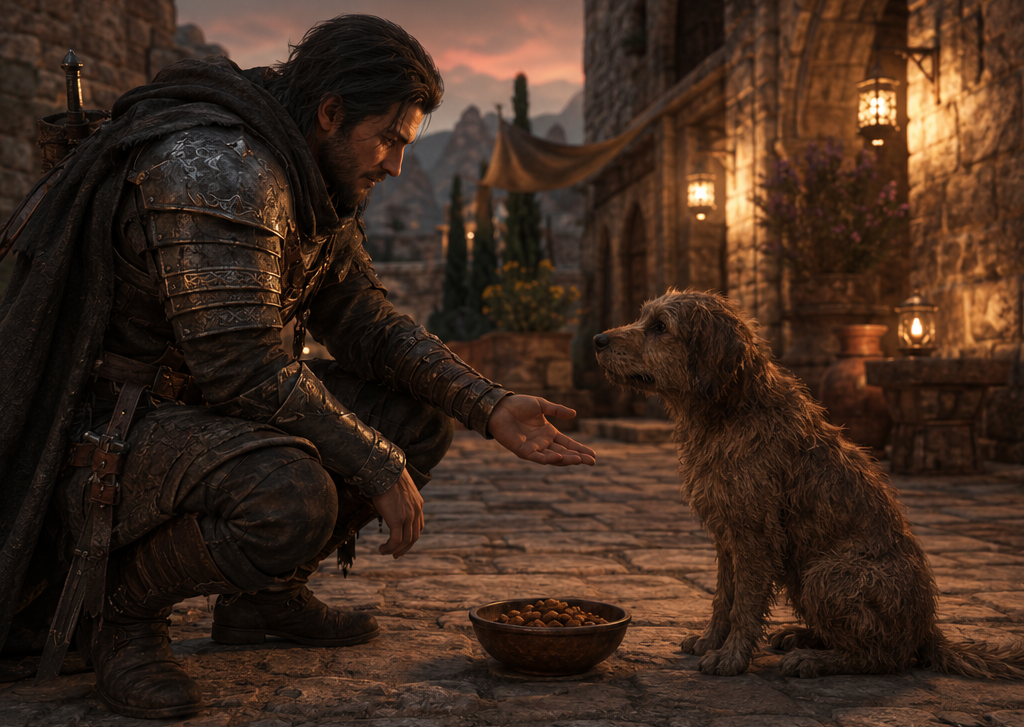
How to Tame Pets in Crimson Desert: Dogs, Cats, and What They Actually Do
Getting a loyal companion in Crimson Desert isn’t complicated, but it does take a little patience. The taming system is built around trust, not combat, which means your first instinct to fight your way to a pet is the wrong one. You build a relationship instead, and that relationship has a clear endpoint: reach 100 trust and the animal is yours.
This guide covers the full process for both dogs and cats, starting with the Brown Dog in Hernand, which is the cleanest early-game example. If you’re trying to figure out what these animals actually do once you have them, that’s covered too — because the answer is less exciting than the taming process and that’s worth knowing upfront.
How Pet Taming Works in Crimson Desert
The trust system is the foundation of everything. Every pet has a trust meter that runs from 0 to 100, and once you hit that threshold you’ll see a prompt to “Take In” or register the animal as your companion. Until then, it’s just a wild animal you’ve been spending time with.
You build trust in two ways: petting and feeding. Petting gives you a flat +5 trust per interaction, which sounds small but adds up. There’s a daily cap on how much trust you can earn through petting alone, which means the process is genuinely time-gated. Most players take at least a couple of days of dedicated interactions to reach 100, depending on the animal and what you’re feeding it.
Crimson Desert · Companion System
Pet Trust Simulator
Daily petting limit reached — come back tomorrow.
Companion Registered!
Your new dog will follow and help loot nearby items.
Feeding is the faster route and where dogs and cats start to diverge. Different animals have food preferences, and using the right food gives you a better trust bump per feeding. Using the wrong food still works, but you’re leaving efficiency on the table if you’re trying to minimise the grind.
Why This System Feels Different
The trust loop is less demanding than it sounds at first. You don’t need to build a spreadsheet or optimise every interaction — you just check in on your target animal when you’re in the area, pet it a few times, toss some food down, and move on with your session. It’s a slow drip rather than a dedicated farming grind.
What Crimson Desert doesn’t do is make you fight the animal or exhaust it into submission, which is how a lot of games handle taming. The softer approach fits the tone of the companion system generally. These are pets, not battle summons.
Crimson Desert · Companion Guide
Dogs vs Cats: Which Pet Is Right for You?
| Dog | Cat | |
|---|---|---|
| How to Pet | Walk up and interact directly | Pick up first, then pet |
| Preferred Food | Meat (various types) | Fish, milk, bird meat |
| Trust per Pet | +5 | +5 |
| Feed Efficiency |
|
|
| First-Timer Difficulty |
|
|
| Earliest Location | Brown Dog, Hernand (quest with Naira) |
Various towns |
| What They Do | Follow + loot nearby drops | Follow + loot nearby drops |
| Best For | First companion | Second or third pet |
Getting Your First Dog
The Brown Dog in Hernand is where most guides point you first, and there’s a good reason for that. It’s accessible early, tied to a manageable quest line involving a character called Naira and an item called “A Chunk of Meat,” and it puts the taming system in front of you in a low-pressure context before the game starts demanding more of your attention elsewhere.
Dogs in general tend to cluster around town centres, near bulletin boards, stables, and other public spaces. If you’re not in Hernand yet, keep an eye on those kinds of areas in any settlement and you’re likely to find a dog candidate without much searching.
What Dogs Like to Eat
Meat is your reliable choice for dogs. Some guides specify bird meat, others note that various meat types work fine, and the honest answer is there’s some variation between sources on the exact food that gives the best trust boost. What’s consistent across every guide is that meat works, petting works, and patience finishes the job. You don’t need to lock in a single optimal strategy — just bring some meat and interact with the dog regularly.
The trust-building process with dogs is generally the more forgiving of the two animal types. Pick it up, pet it a few times, drop some food, and come back next time you’re in town.
Taming Cats: A More Patient Process
Cats follow the same trust system as dogs, but the interaction is slightly more fiddly in practice. To pet a cat, you usually need to pick it up first. This sounds simple but it changes the rhythm of the interaction — you’re not just walking up and pressing a button the same way you would with a dog. The cat needs to be in your hands before the petting option becomes available.
Feeding cats is also a bit trickier because they tend to wander. The practical tip that comes up repeatedly in guides is to place the food down while you’re still holding or controlling the cat, so it doesn’t drift away before eating. It’s a small thing but it saves a lot of frustration if you’re not expecting it.
What Cats Prefer
Fish, milk, and bird meat all appear consistently in guides as preferred cat foods. Cats tend to give smaller trust gains per basic food item than dogs do, which is part of why they take a bit more patience. You’re not fighting the system — you just need slightly more of it.
The extra fiddliness of cat taming makes dogs the obvious recommendation for your first companion, but cats are genuinely worth the effort once you know what you’re doing. The process is the same, the endpoint is the same, and the result is a companion that functions identically once adopted.
What Your Pet Actually Does
Here’s the practical part that doesn’t show up clearly in a lot of coverage: pets in Crimson Desert are utility companions, not combat pets. They follow you around, and their primary function is looting nearby items from corpses during and after fights. That’s the main mechanical reason to have one.
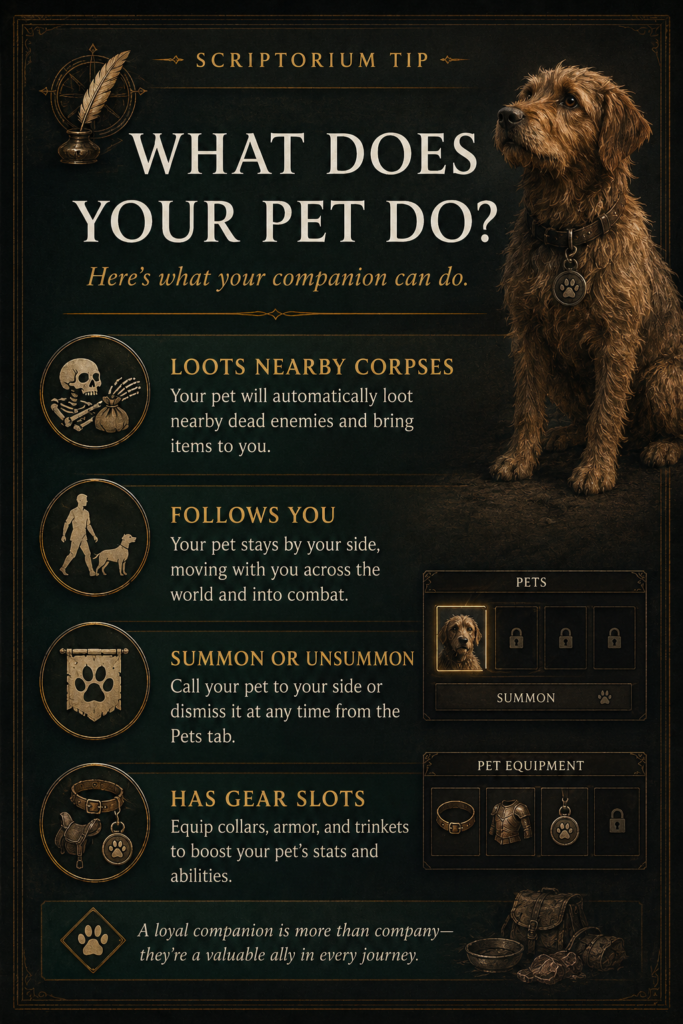
The looting assistance is genuinely useful during farming sessions. Instead of manually checking each enemy corpse, your pet picks up nearby drops while you’re still moving or setting up the next fight. Over a long session it saves a noticeable amount of time, and it keeps the pace of combat smoother.
Managing Your Pet
Pets are handled from the Pets tab in your inventory. You can summon and unsummon them from there, which matters if you’re moving through content where a companion trailing behind you might be inconvenient. The tab also shows gear and armour slots for your pet in the current build, which is worth knowing — there’s a customisation layer here even if the combat role is minimal.
The honest characterisation is that pets are a quality-of-life feature rather than a core gameplay system. If you’re expecting them to fight alongside you or open up new combat options, you’ll be underwhelmed. If you’re expecting a companion that follows you around and quietly makes farming and exploration slightly smoother, you’ll get exactly that.
Starting Points by Animal
If you’re deciding where to begin, the short version is this: start with the Brown Dog in Hernand. It has a specific quest line that introduces the taming system cleanly, it’s accessible early in the game, and dogs are the more forgiving animal type for first-time tamers. Once you’ve got the process down, cats are worth taming too — they’re just a bit more hands-on in the early interactions.
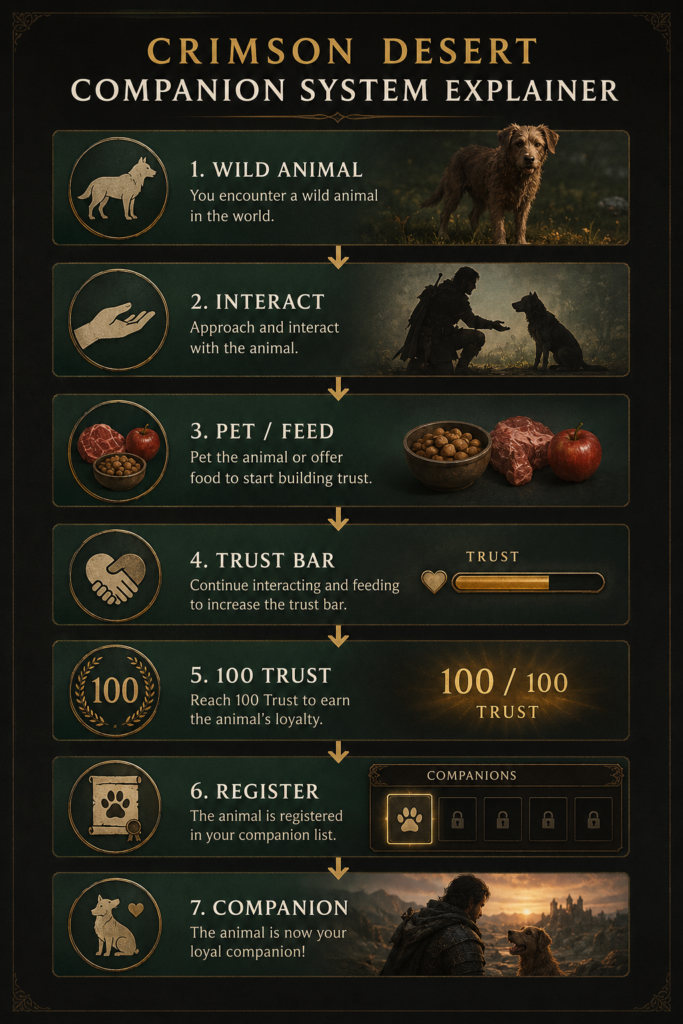
Whichever animal you start with, the loop is the same. Find your target, build a regular habit of petting and feeding during your time in the area, and let the daily trust gains accumulate until you hit 100. The register prompt will appear when you’re there, and from that point the animal is yours for the rest of your playthrough.
If you’re working through Crimson Desert’s companion and world systems more broadly, the Crimson Desert beginner’s guide is worth reading alongside this — it covers how a lot of the game’s progression systems connect, including things like the Greymane Camp that becomes your base of operations. And if you’re interested in the bounty system, which is one of the other major open-world loops in the game, the complete hunter’s guide covers that in detail.
The fast travel system is also worth understanding early if you’re planning regular trips back to Hernand to work on your dog’s trust meter. Getting around the map efficiently makes the repeated visits much less tedious.
Final Thoughts
Pet taming in Crimson Desert is a slow-burn system, but it’s a forgiving one. You’re not going to fail at it or miss a window — you just interact with an animal regularly until it trusts you enough to come home. Dogs are easier to start with, cats take a little more patience, and both end up as looting companions once adopted.
The system won’t surprise veteran RPG players used to more complex companion mechanics, but it fits Crimson Desert’s pacing well. You build trust with the world in small increments, and the animals are part of that pattern.
Continue Your Journey
Crimson Desert Beginner’s Guide: What to Do First — a full breakdown of how to orient yourself in the early hours of the game.
How the Bounty System Works in Crimson Desert — the complete guide to hunting bounties and keeping targets alive for better rewards.
How to Build and Expand the Greymane Camp — everything you need to know about your base of operations.
How Fast Travel Works in Crimson Desert — finding Abyss Nexus points and moving around the map efficiently.
How to Capture Bounties Alive in Crimson Desert — the full walkthrough for non-lethal takedowns including the Bianca fight.
Have you tamed a pet in Crimson Desert yet? Drop a comment below — I’m curious whether people went for the Brown Dog first or stumbled into a cat and had to figure it out the hard way.
Want more Crimson Desert guides as they drop? Sign up for the Scriptorium newsletter — it goes out every Wednesday with new posts, a GM tip, and whatever else is worth reading this week.
RPG news, GM tips, and system deep dives — straight to your inbox, no filler.