Skill Triggers in Lancer TTRPG: Shaping Narrative Play
Lancer is a tabletop role-playing game (TTRPG) that combines mech combat with narrative-driven storytelling. Set in a far-future science fiction setting, players take on the roles of mech pilots, engaging in both intense mech battles and character-driven narrative scenes.
The game system is designed to balance tactical combat with rich storytelling, using different mechanics for mech combat and narrative play.

How Skill Triggers Influence Narrative Play in Lancer
Skill triggers play a significant role in shaping narrative play in Lancer, offering a unique approach to character abilities and action resolution outside of mech combat. Here’s how they impact the game:
- Action Resolution: Triggers allow players to use their character’s skills and background to resolve actions during narrative scenes. They apply bonuses to skill checks when certain conditions are met, making the character’s expertise tangible in gameplay.
- Combat Outside Mechs: In narrative combat (fights not involving mechs), triggers are used to determine outcomes rather than the more detailed mech combat rules. This keeps non-mech encounters fast-paced and narrative-focused.
- Character Specialization: Triggers help define a character’s expertise and background, allowing them to excel in specific situations relevant to their experience. This adds depth to character creation and development.
- Narrative Focus: By using triggers instead of detailed combat rules, narrative play remains fast-paced and story-driven. This helps maintain the flow of the narrative without getting bogged down in complex mechanics.
- Skill Check Bonuses: When a trigger’s conditions are met, it provides either Accuracy (roll two d20s, take the higher) or a flat +2 bonus to the skill check. This mechanic adds a tactical element to skill use in narrative scenes.
- Flexible Application: Triggers can be used creatively in various situations, encouraging players to think about how their character’s background applies to different challenges. This fosters creative problem-solving and roleplaying.
- Non-Combat Utility: Many triggers are useful in non-combat situations, such as social interactions, exploration, or problem-solving. This emphasizes the importance of narrative play in Lancer.
- Character Development: As characters gain experience, they can acquire new triggers, representing growth and new skills. This provides a clear path for character progression outside of mech abilities.
- Streamlined Mechanics: Triggers simplify conflict resolution in narrative play, keeping the focus on storytelling rather than complex rules. This makes narrative scenes more accessible and faster to resolve.
- Distinct from Mech Combat: Triggers are specifically designed for narrative play and do not apply to mech combat, maintaining a clear separation between the two modes of play. This distinction helps players switch mindsets between narrative and tactical gameplay.
Examples of Skill Triggers in Lancer
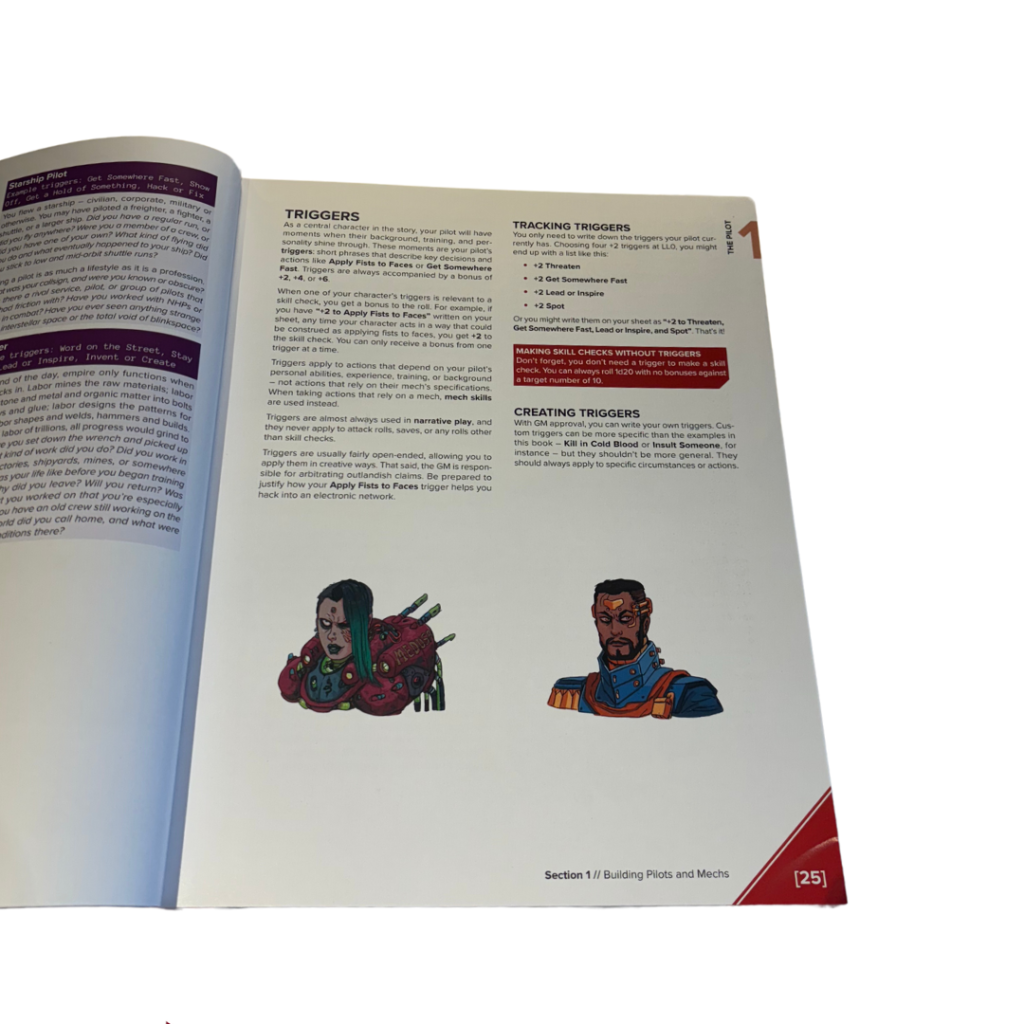
In Lancer, skill triggers are player-defined abilities that represent a character’s expertise, background, or unique skills. These triggers are flexible and can be applied creatively in narrative situations. When a trigger is relevant to a skill check, it typically provides either Accuracy (roll two d20s, take the higher) or a +2 bonus to the roll. Here are some examples of skill triggers:
- “Tough Guy”: Could apply to intimidation attempts or feats of physical strength.
- “Veteran Pilot”: Useful for piloting-related checks or knowledge about mech operations.
- “Street Smart”: Applicable for navigating urban environments or dealing with criminal elements.
- “Tech Wizard”: Helpful for repairing or hacking electronic systems.
- “Diplomat”: Useful in negotiations or social interactions with various factions.
- “Survivalist”: Could apply to wilderness survival or scavenging for resources.
- “Tactical Genius”: Helpful for strategic planning or analyzing combat situations.
- “Medic”: Applicable for first aid or medical knowledge checks.
- “Underworld Connections”: Useful for gathering information or making contacts in criminal circles.
- “Zero-G Specialist”: Helpful for operating in low or zero-gravity environments.
It’s important to note that these triggers are primarily used in narrative play and do not apply to mech combat or attack rolls. They provide a way for players to customize their characters and highlight their unique abilities outside of mech piloting, adding depth to the overall gameplay experience.
What are some common pitfalls when using triggers in Lancer?
While skill triggers are a powerful tool for enhancing narrative play in Lancer, there are several common pitfalls that players and Game Masters (GMs) should be aware of:
- Overuse: Players may try to apply triggers too frequently, asking for bonuses in nearly every situation. This can slow down gameplay and become repetitive, potentially diminishing the impact of truly appropriate trigger uses.
- Overly Broad Triggers: Creating triggers that are too general, like “Good at Everything,” which could potentially apply to almost any situation. This goes against the spirit of triggers as representing specific areas of expertise or background.
- Misunderstanding Scope: Players might attempt to use triggers in mech combat, where they don’t apply. It’s important to remember that triggers are meant for narrative play only, maintaining the distinction between narrative and mech combat systems.
- Inconsistent Application: GMs may struggle with consistently determining when a trigger applies, leading to perceived unfairness. This can be particularly challenging when dealing with creatively worded triggers.
- Lack of Creativity: Players might default to generic triggers rather than creating unique ones that reflect their character’s background and personality. This can lead to less engaging narrative play and missed opportunities for character development.
- Rules Debates: Disagreements between players and GMs about whether a trigger applies in a given situation can disrupt the flow of the game. These debates can detract from the narrative focus that triggers are meant to enhance.
- Imbalance: Some players might create more versatile triggers than others, leading to an imbalance in narrative effectiveness. This can result in some characters overshadowing others during non-mech portions of the game.
- Neglecting Mech Skills: Players might focus too much on trigger-based actions and neglect developing their mech-related skills. This can lead to an imbalance in character effectiveness between narrative and mech combat scenes.
- Overspecialization: Creating triggers that are too specific can limit their usefulness in the broader narrative. While specialized triggers can be flavorful, they may not come into play often enough to be satisfying.
- Forgetting Limitations: Players and GMs might forget that triggers don’t apply to attack rolls, saves, or any rolls other than skill checks. This can lead to misuse of the trigger system and potential rule conflicts.
To mitigate these issues, clear communication between players and GMs, as well as a good understanding of the game’s intent, are crucial. Regular check-ins about trigger usage, open discussions about balance, and a willingness to adjust triggers as the game progresses can help ensure that this system enhances rather than detracts from the overall Lancer experience.
How can GMs ensure triggers are balanced and not overused?
Game Masters (GMs) play a crucial role in maintaining the balance and integrity of the trigger system in Lancer. Here are several strategies GMs can employ to ensure triggers are balanced and not overused:
- Clear Communication: Discuss trigger usage and expectations with players during character creation and session zero. This sets the groundwork for how triggers will be handled in the game.
- Encourage Specificity: Guide players to create triggers that are specific enough to be meaningful but not so broad they apply to every situation. This promotes more interesting and balanced trigger use.
- Limit Trigger Stacking: Enforce the rule that only one trigger can apply to a given skill check. This prevents situations where players might try to stack multiple triggers for an excessive advantage.
- Contextual Approval: Assess trigger applicability based on the narrative context, not just the literal wording. This allows for more nuanced and fair trigger implementation.
- Balanced Distribution: Ensure all players have a similar number of triggers with comparable utility. This helps prevent some characters from overshadowing others in narrative play.
- Rotation Encouragement: Prompt players to use different triggers in various situations, avoiding overreliance on a single trigger. This keeps the narrative play diverse and engaging.
- Narrative Justification: Ask players to explain how their trigger applies to the current situation, fostering creativity and preventing automatic use. This encourages more thoughtful trigger application.
- Difficulty Adjustment: Increase the difficulty of checks for overly broad trigger applications. This balances out the advantage of widely applicable triggers.
- Regular Review: Periodically review and adjust triggers as the campaign progresses to maintain balance. This allows for fine-tuning based on actual play experience.
- Situational Limitations: Introduce scenarios where certain triggers are less effective, encouraging diverse problem-solving. This prevents any single trigger from being too powerful.
- Reward Creativity: Offer bonuses or narrative advantages for particularly clever or fitting trigger applications. This encourages players to think creatively about their trigger use.
- Clear Boundaries: Establish that triggers don’t apply to mech combat or other specific game elements to prevent overuse. This maintains the distinction between different aspects of the game.
By implementing these strategies, GMs can maintain a balance between player empowerment and game integrity, ensuring triggers enhance the narrative experience without dominating gameplay. The key is to foster an environment where triggers add depth and flavor to the narrative play, rather than becoming a mechanical crutch or source of imbalance.
Remember, the goal is to enhance the storytelling and character expression aspects of Lancer while keeping the game fair and enjoyable for all players. Regular check-ins with players about trigger usage and a willingness to adjust as needed will help create a more satisfying experience for everyone involved.
Conclusion
Skill triggers are a vital component of the Lancer TTRPG system, serving as a bridge between a character’s background and their actions in the game world. They add depth to narrative play, allowing players to showcase their characters’ unique abilities and experiences outside of mech combat.
The flexible nature of triggers encourages creativity and roleplay, making each character feel distinct and allowing players to engage with the game world in meaningful ways. From the “Tough Guy” intimidating a local thug to the “Zero-G Specialist” navigating a derelict space station, triggers bring character concepts to life in exciting and unexpected ways.
However, like any game mechanic, the effective use of triggers requires balance and thoughtful implementation. Both players and GMs play crucial roles in ensuring that triggers enhance the game rather than dominate it. By being aware of common pitfalls and employing strategies to maintain balance, groups can harness the full potential of the trigger system.
Ultimately, skill triggers in Lancer offer a powerful tool for storytelling and character development. They provide a mechanical framework for representing a character’s expertise while keeping the focus on narrative and roleplay. When used effectively, triggers can lead to memorable moments, creative problem-solving, and a richer, more immersive gaming experience.
As you embark on your Lancer campaigns, remember that the true value of skill triggers lies not just in the mechanical advantages they provide, but in the stories they help you tell and the unique characters they allow you to bring to life.
Whether you’re a player crafting the perfect trigger for your character concept or a GM guiding your group through a trigger-enhanced narrative, embrace the creativity and depth that this system brings to your game.
RPG news, GM tips, and system deep dives — straight to your inbox, no filler.