Running Call of Cthulhu for the First Time: A Keeper’s Survival Guide
The rulebook is open, your investigators are ready, and somewhere between the last read-through and tonight’s session you’ve realised nobody actually taught you how to make a table feel afraid. That gap is normal, and it’s the one thing most Call of Cthulhu advice skips past on its way to explaining Sanity rolls. Here’s what actually gets a first session right, from the mindset shift down to what to have on the table before anyone sits down.
The Mindset Shift Nobody Warns You About
If most of your Keeper experience so far has come from combat-focused systems, Call of Cthulhu is going to feel like running a different kind of game entirely, because it is. Combat here is rare and dangerous by design, and pacing revolves around dread, discovery, and the slow erosion of what your investigators thought they understood about the world.
Where a combat-first GM measures a session’s success by whether the fight felt tense, a Call of Cthulhu Keeper measures it by whether the table felt something crawl under their skin during a quiet scene. That’s a genuinely different skill, and it’s worth naming explicitly before your first session so you’re not chasing the wrong feeling all night. If you haven’t already, our rundown of what makes Call of Cthulhu tick is a useful primer on the tone this shift is aiming for.
Published Scenario or Homebrew? Start Published
Almost every new Keeper asks whether to homebrew their first adventure or run something published, and for a first session the answer is almost always published. A published one-shot has already solved the hardest problems for you: pacing, clue placement that doesn’t leave investigators stuck, and an ending that actually lands.
Homebrewing your first Call of Cthulhu session means solving investigative pacing, horror tone, and system mechanics all at once, with no safety net if a clue trail goes cold at the table. Save your original scenario ideas for once you’ve run a published one-shot or two and have a feel for how much information investigators actually need to keep moving.
This isn’t a permanent restriction, just a sequencing suggestion. Plenty of confident Keepers write terrific original scenarios eventually. They just don’t usually start there.
Running Sanity Without Stalling the Table
Sanity mechanics are the system most new Keepers worry about getting wrong, and the good news is the fix is mostly about pacing, not rules mastery. Call for a Sanity roll when something in the fiction genuinely earns it, a corpse, a glimpse of something wrong, a piece of forbidden knowledge, rather than defaulting to it for every unsettling description.
Keep the roll itself quick. Ask for it, resolve it, narrate the result in a sentence or two, and move on. The tension comes from what the roll represents, not from turning it into a lengthy side conversation about temporary insanity tables mid-scene. If a result does trigger a temporary insanity effect, a short, evocative description of the symptom is usually more effective at the table than reading the mechanical text verbatim.
The investigators who track skills like Psychology and Occult carefully, something covered in our piece on which Call of Cthulhu skills actually matter, will naturally create more Sanity-check moments than others. That’s fine. Let the system do its job rather than forcing extra checks to compensate.
The Mistakes That Sink a First Session
Over-preparing plot, under-preparing tone. New Keepers often spend hours mapping out every possible branch of a scenario and almost no time thinking about how a scene should feel. Investigators will surprise you regardless of how much you plan, but tone is something you can actually carry into any scene no matter where the plot goes.
Under-preparing tone specifically means having no plan for pacing dread. Horror needs quiet stretches to work. A session that’s wall-to-wall clues and encounters with no breathing room rarely lands as scary, it just feels busy. Build in a scene or two of quiet unease, an empty house, a strange silence, before the next revelation.
Railroading investigators away from danger. It’s tempting to protect your table from a genuinely lethal encounter by fudging outcomes behind the screen, but Call of Cthulhu’s danger is part of its identity. If investigators walk into something dangerous because of their own choices, let the dice tell the truth. Warning them clearly in the fiction beforehand is fairer than quietly softening the consequences after the fact.
Setting Expectations With a Quick Session Zero
Before your first Call of Cthulhu session, spend ten to fifteen minutes on a lightweight session zero covering three things: lethality (investigators can die, and sometimes will), horror tone (what’s on the table versus what isn’t), and consent around disturbing content. This isn’t optional table-management overhead, it’s part of running the genre responsibly.
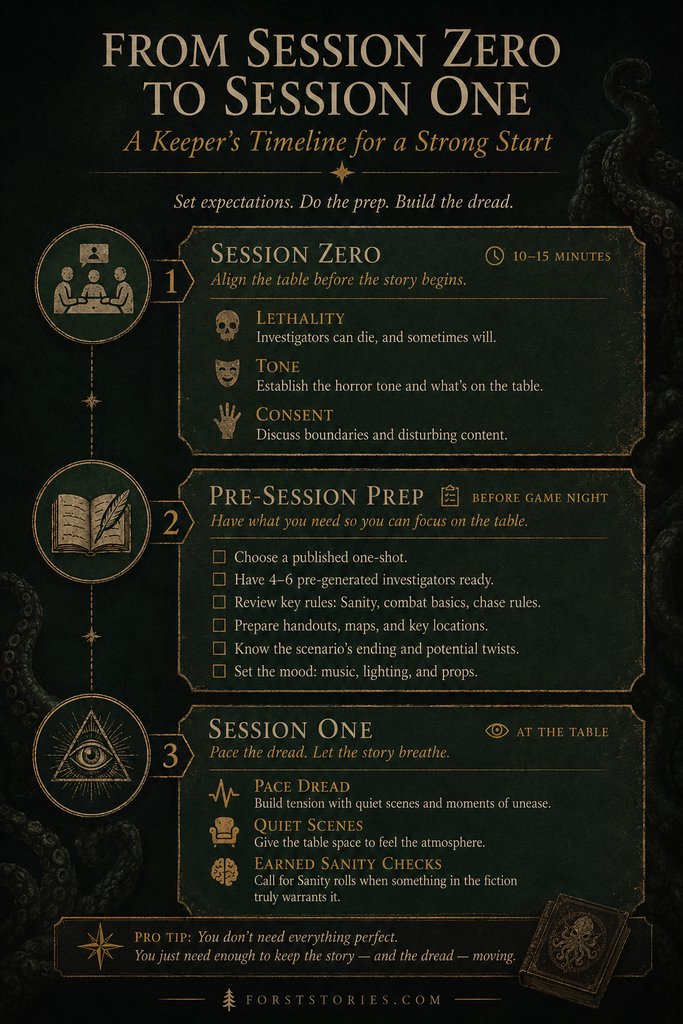
Ask directly whether anyone has hard limits on content like body horror, gore, or specific phobia triggers, and adjust your prepared material accordingly if needed. A five-minute conversation here saves you from an awkward mid-session moment where a scene lands badly for someone at the table. If you’re building your investigator team as part of this conversation, our guide on building a balanced Call of Cthulhu party pairs well with session zero, since occupation and skill spread affects what kinds of scenes will spotlight each character.
Your Pre-Session Checklist
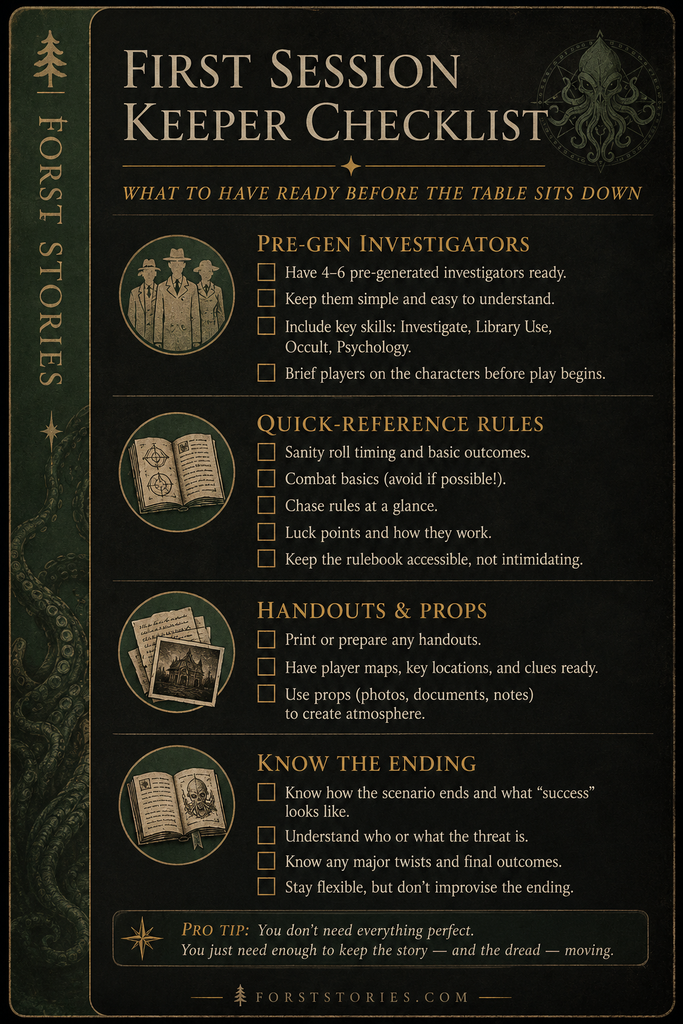
Have your pre-generated investigators ready, ideally with a one-line personality hook each so players can grab a character and understand who they are immediately. If you’re running your own investigators rather than pre-gens, our guide to creating an investigator in Call of Cthulhu 7th Edition walks through character creation in more depth.
Keep the core rulebook or a quick-reference sheet open to the Sanity and combat sections, since those are the two places you’re most likely to need a fast ruling. Have a short, simple soundtrack or ambient audio ready if your group finds that helps, but don’t rely on it, tone comes from pacing and narration first.
Print or have digital copies of any handouts the scenario includes; physical props (letters, photographs, newspaper clippings) do a lot of heavy lifting for atmosphere in this genre specifically. Finally, know your scenario’s ending, or at least its likely endings, well enough that you’re not discovering the climax at the same time as your players.
When You’re Ready to Go Further
Once your first session goes well and your table wants more, Chaosium’s own expansion material is worth exploring, and our guide to Call of Cthulhu expansion books is a solid next stop for picking your second scenario or campaign. If your group is curious how the setting compares to other Mythos-adjacent games, Call of Cthulhu vs. Delta Green is worth a read once you’ve got a session or two under your belt, and a beginner’s guide to the Cthulhu Mythos helps if your table wants more context on the cosmic horror your investigators are up against.
The Short Version
Run a published one-shot first, treat Sanity rolls as quick and earned rather than constant, prepare tone alongside plot, let genuine danger stay genuine, and spend ten minutes on session zero before you start. None of this requires you to be an experienced Keeper already. It just requires knowing where new Keepers usually trip, and choosing not to trip there yourself.
Your first session doesn’t need to be perfect. Call of Cthulhu is forgiving of a Keeper still finding their footing, as long as the table trusts that the dread is intentional and the danger is real. Everything else, the polish and the confidence, comes with your second session, and your third.
RPG news, GM tips, and system deep dives — straight to your inbox, no filler.