10 Things to Know Before Playing Triangle Agency
If you’ve been keeping an eye on the indie TTRPG space lately, Triangle Agency has probably crossed your radar at least once. It’s been quietly building a reputation as one of the more distinctive games to come out of the paranormal investigation corner of the hobby — the kind of game that makes experienced players stop and say “wait, that’s different.” But it’s also the kind of game that can catch first-timers completely off-guard if they walk in expecting something familiar.
This isn’t your standard dungeon fantasy or eldritch horror romp. Triangle Agency has its own logic, its own tone, and a few genuinely unusual design choices that will feel weird until they suddenly click. Whether you’re a GM prepping your first session or a player trying to figure out what you’re signing up for, here are ten things worth knowing before you sit down at the table.
1. This Is Corporate Paranormal Horror, Not Classic Fantasy
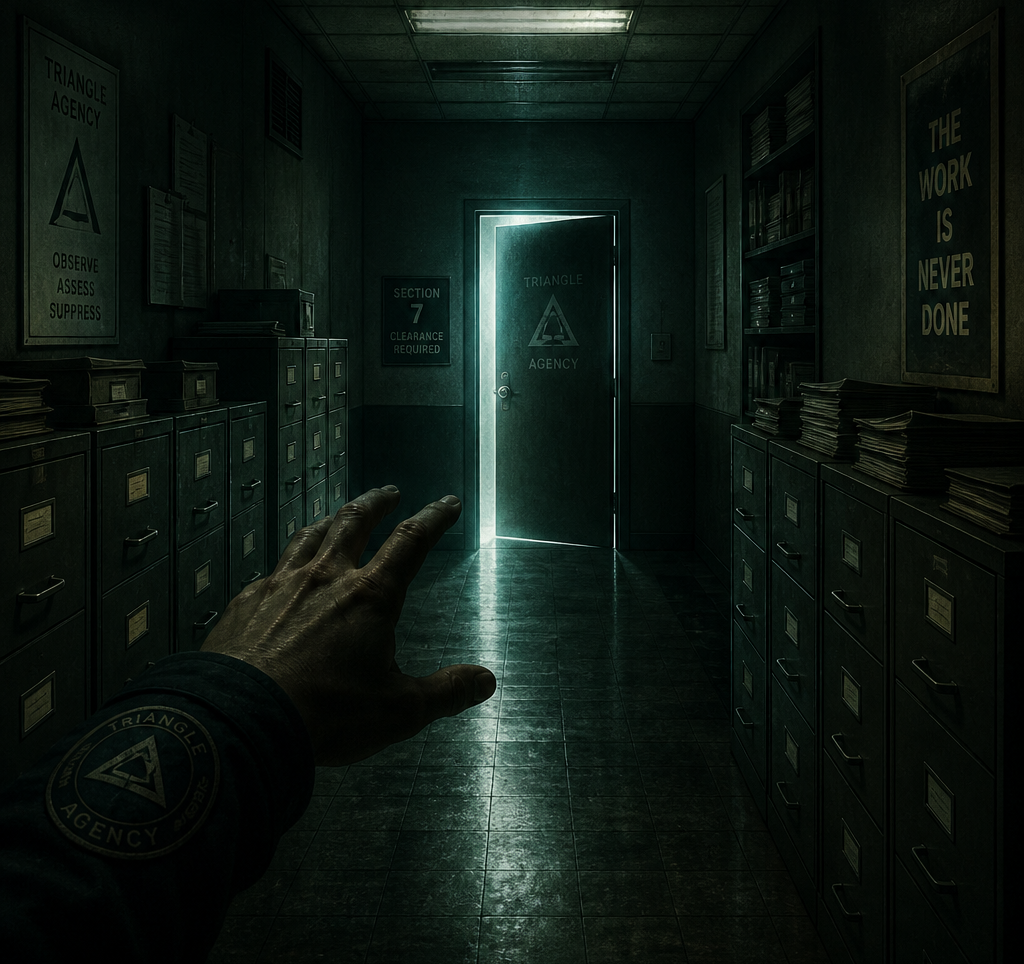
Triangle Agency drops you into a modern setting where you work as a field agent for a powerful, opaque organisation tasked with investigating and containing Anomalies — strange phenomena that don’t fit neatly into any normal framework. There are no dungeons to crawl, no dragons to fight, no ancient prophecies to fulfil. The threats are weirder, more ambiguous, and often more unsettling than a stat block.
If you’re coming from D&D or similar fantasy systems, the shift in setting requires a genuine mental reset. Your frame of reference for what constitutes a problem — and what constitutes a solution — needs to change completely. The good news is that the setting does a lot of work to help you make that adjustment.
Think Control meets X-Files with a healthy dose of Kafka thrown in. If any of those touchstones sound appealing, you’re probably going to have a great time.
2. The Bureaucracy Is Part of the Game, Not Background Noise
Here’s something that surprises a lot of players: the workplace elements of Triangle Agency aren’t just flavour. Mission reports, performance reviews, promotion pressure, and the daily grind of being an employee of a mysterious organisation are woven into the actual gameplay experience. Your relationship with the Agency as an institution matters.
This isn’t just tone-setting. The “job” side of the game creates real tension and real stakes. Do you follow protocol and file everything correctly, or do you cut corners to actually deal with what you’ve found? Are you climbing the ladder, or are you becoming a liability? These questions shape how your campaign develops.
If your group tends to engage with narrative pressure and workplace dynamics — rather than optimising stats and clearing encounters — this game was practically designed for you.
3. Your Character Has a Divided Life
One of Triangle Agency’s core design pillars is the tension between your agent’s professional existence and their personal one. Characters have normal human relationships, obligations, and lives outside the Agency. Balancing those two worlds — and keeping them from colliding — is one of the richest sources of roleplay in the game.
This is a game where the question “how is this affecting the person, not just the character sheet” is always relevant. That’s a different mode of play than systems where personal backstory is mostly there to justify your starting equipment. Here, it feeds directly into the drama.
For players who love character-driven stories, this is genuinely exciting territory. For players who prefer a cleaner focus on the mission itself, it’s worth knowing upfront that the game expects you to engage with both layers.
4. The Core Dice Mechanic Is Unlike Most Systems
Triangle Agency uses a dice pool, and at the centre of that pool is something you won’t find in most other TTRPGs: threes matter in a specific and meaningful way. The system is built around what you roll relative to that number, and rolling exactly three threes carries a particular significance in the game’s resolution logic.
It sounds strange until you play it, at which point it makes a kind of elegant sense. But it does mean there’s a learning curve if you’re used to reading dice intuitively — you’ll need to pay a bit more attention to what’s on the table rather than just counting successes.
Give it a session or two before you pass judgement. Most players report that the mechanic becomes second nature faster than expected, and that it creates a specific texture to the game that feels distinctly its own.
5. Failure Is the Default Expectation
This one is important to flag clearly: Triangle Agency is designed around the assumption that ordinary human effort usually isn’t enough. Rolling the dice and hoping for the best won’t cut it in most situations. Characters typically need external assistance — either from the Agency’s resources or from their Anomaly-derived abilities — to actually succeed at what they’re attempting.
This isn’t a flaw in the system. It’s a deliberate design choice that reinforces the horror of the setting. Your agents are people doing something humans aren’t really equipped for, and the dice reflect that. The question isn’t just “do I succeed?” but “what am I willing to draw on to make this work?”
If your group has played games like Call of Cthulhu where investigator competence is finite and often insufficient, you’ll feel the philosophical similarity immediately.
6. Anomaly Powers Are Both Your Greatest Asset and a Liability
Characters in Triangle Agency have a connection to an Anomaly — one of the strange phenomena the Agency is supposed to be containing. That connection gives them abilities that can genuinely shift the outcome of a situation, often dramatically. But it also creates consequences.
This is a classic dramatic tension device, and the game uses it well. Leaning into your Anomaly powers tends to solve immediate problems while creating longer-term complications. Staying clean means struggling against the odds with ordinary human capacity. Neither path is simply “correct,” and the push-pull between them is where a lot of the most interesting character decisions live.
For GMs, this gives you a natural engine for escalating stakes without having to manufacture external threats. The players’ own choices do a lot of the heavy lifting.
7. Investigation Rewards Proactive Play
If you’re used to games where investigation means rolling Perception or gathering evidence to unlock the next plot beat, Triangle Agency operates differently. The system strongly rewards players who engage actively with what they already know and push toward direct answers rather than waiting for information to be delivered to them.
Crucially, community advice consistently points toward not hiding essential information behind failed tests. Clues are meant to be accessible; what the game asks of players is what they do with them. This shifts the weight of investigation from dice rolls to decisions.
For GMs, this is worth emphasising during a session zero. Players who expect to be rewarded for passive searching may feel lost at first, while players who enjoy theorising and taking initiative will feel like the game is perfectly calibrated for them.
8. The Agency Probably Isn’t Telling You Everything
One of the setting’s most intriguing qualities is the deliberate ambiguity around the Agency itself. Is it actually containing Anomalies for the right reasons? Who’s really in control? What are the higher-ups actually trying to achieve? The game’s GM-facing material actively encourages this uncertainty, and reviews of the game consistently note that the organisation’s trustworthiness is a live question rather than a settled fact.
This is excellent design for a paranormal horror game. The sense that the institution you work for might itself be part of the problem creates a layer of tension that doesn’t require any external antagonist to sustain. Your own employer might be the thing you should be most worried about.
For groups who loved the slow-burn institutional horror of games like Lancer — where the organisations characters operate within are morally complicated — this will resonate immediately.
9. The Campaign Structure Gives You Shape Without Locking You In
Triangle Agency is designed to work as a campaign of roughly 10 to 30 missions, with each mission providing a natural unit of play that has its own beginning, middle, and end. This mission structure gives you meaningful pacing without demanding that you commit to a multi-year saga before you know whether you like the game.
Crucially, it also supports one-shots. If your group wants to trial the system before investing in a full run, you can run a single contained mission and get a genuine sense of how the game works. That flexibility makes it a low-risk pick for groups that want to experiment before committing.
For groups who’ve enjoyed board games with campaign modes — where mission structure provides narrative spine — the format will feel immediately comfortable.
10. The Tone Can Shift Fast, and That’s a Feature
Reviews of Triangle Agency describe it as a game that moves between horror, comedy, and workplace drama with real ease — sometimes within the same session. A bureaucratic frustration can tip into genuine dread. A tense investigation can break open into something darkly funny. An emotionally serious character beat can land right in the middle of an otherwise procedural scene.
This isn’t tonal inconsistency — it’s the game working as intended. Real paranormal bureaucracy, if such a thing existed, would probably feel exactly like this. The genre-blending is one of Triangle Agency’s most appealing qualities for groups who find pure horror too relentless or pure comedy too light.
The key for GMs is reading the table and leaning into whatever the moment calls for, rather than trying to hold any single tone consistently. The game has enough structural support that you can let scenes breathe and shift without losing the thread.
Is Triangle Agency Right for Your Group?
Triangle Agency is a genuinely distinctive game that rewards groups who want investigative horror with real character depth, a willingness to engage with systems that don’t work like D&D, and an appetite for moral ambiguity about the institutions their characters serve. It’s not a game for every table — but for the right group, it’s one of the most interesting things currently available in the indie TTRPG space.
If your group has been looking for something that scratches the paranormal investigation itch that games like Control or Disco Elysium create, Triangle Agency is worth a serious look. Pick up the core book, run a one-shot to get a feel for the mechanics, and see whether the system clicks for your players. The early investment is modest. The payoff for the right group is substantial.
The LitRPG space has been exploring bureaucratic and institutional horror in fiction for a while now — Triangle Agency brings that same energy to the table in a form you can actually play.
Continue Your Journey
- What Is a TTRPG? A Beginner’s Guide to Tabletop Roleplaying Games — New to the hobby or introducing someone else? Start here.
- Call of Cthulhu Expansion Books Worth Adding to Your Collection — If paranormal horror is your thing, CoC remains a cornerstone of the genre.
- Lancer TTRPG: A Deep Dive Into the Mech Combat RPG — Another indie system with serious mechanical depth and a complicated relationship with institutions.
- The Best LitRPG Books to Read Right Now — Paranormal bureaucracy and institutional horror show up in fiction too.
- Most Anticipated RPGs: What’s Coming Up in the TTRPG World — See what else is generating buzz in the community.
Have you played Triangle Agency, or are you currently running it? What surprised you most at the table? Drop your thoughts in the comments — especially if you’ve navigated the Anomaly powers question in interesting ways.
If you want to stay across new TTRPG coverage, indie system spotlights, and GM resources as they go up, sign up for The Scriptorium Newsletter — straight to your inbox, no fuss.
RPG news, GM tips, and system deep dives — straight to your inbox, no filler.